
by Samuel Encarnacion

The Start of It All
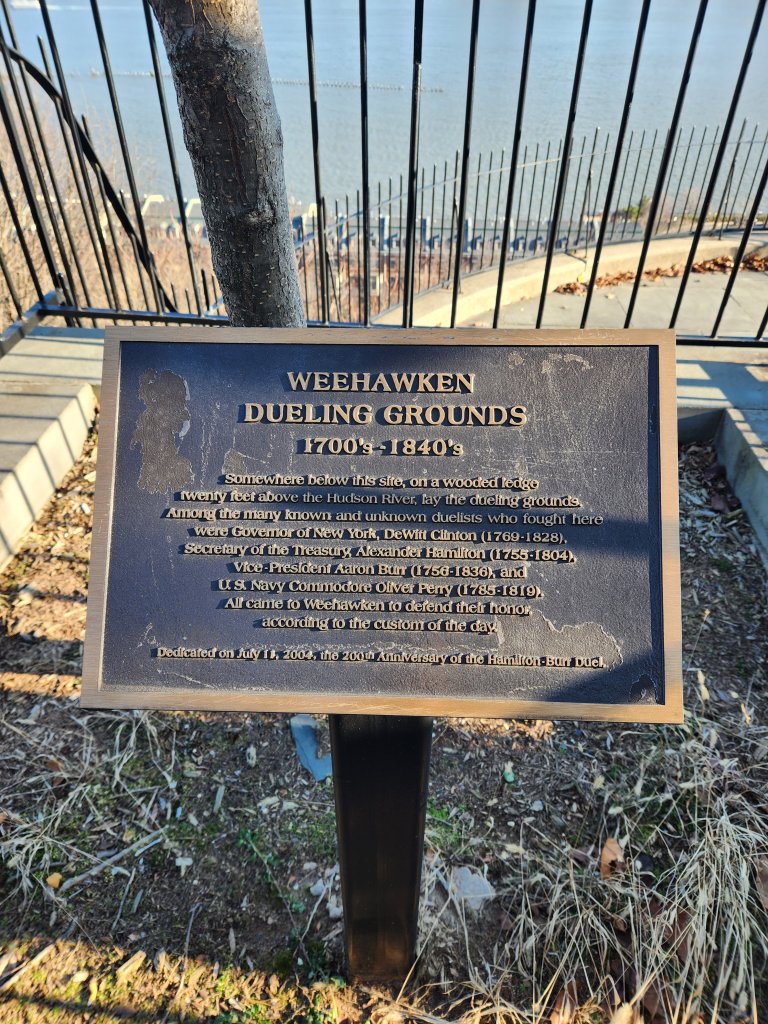
The last week of 2022, I climbed up the Palisades cliffs in Weehawken, New Jersey. Manhattan was in view beyond the Hudson. Traffic was light above and below the cliff. I wanted to see the “spot”. The spot was home to a famous duel that took place one summer in 1804. A battle between two politicians to “restore their honor”. The Weehawken Dueling Ground were Alexander Hamilton and Aaron Burr Jr “settled” their dispute.

The Players
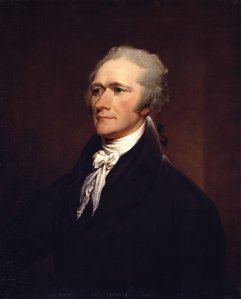
Hamilton: 1st Secretary of Treasury (1789-1795), victim?
Party: Federalist
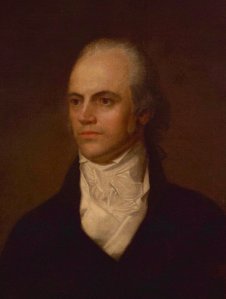
Burr: 3rd Vice President (1801-1805), US Senator NY (1791-1797), villain?
Party: Democratic-Republican
Take Me Down to Elizabethtown
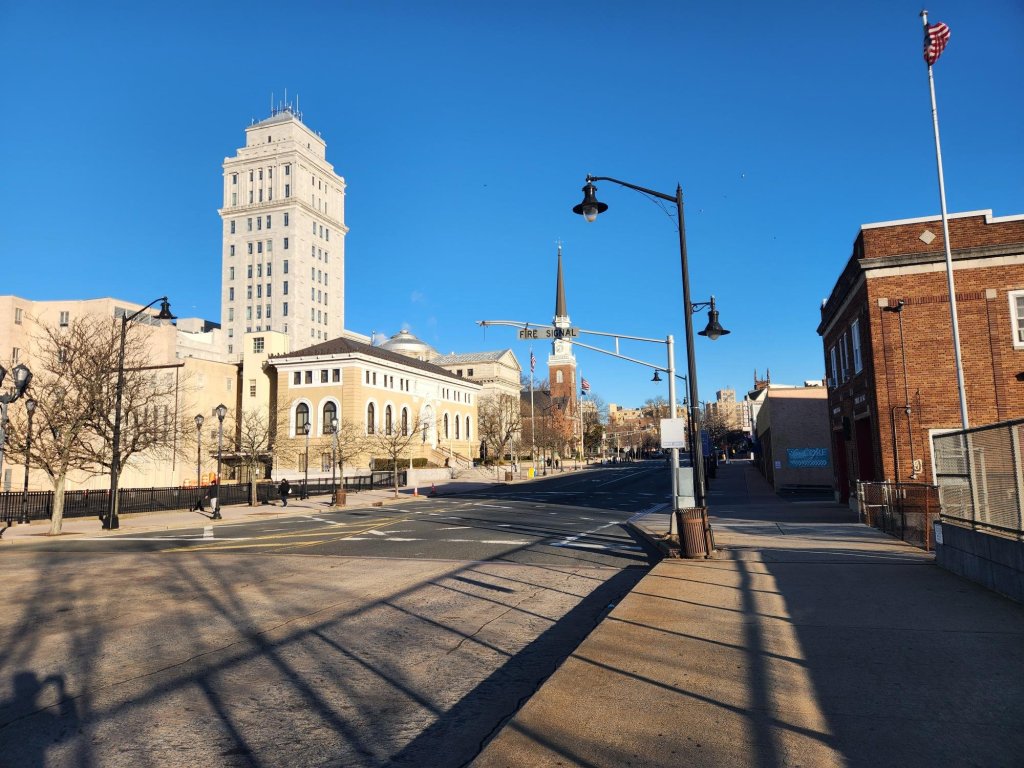
Wanting to take advantage of the sunny day of January 18 (because cloudy days are depressing), I woke up early in my Long Island home to catch the early train to Penn Station fueled by only a few hours of sleep and a cereal bar. My first destination, Elizabeth (known as Elizabethtown until 1855), New Jersey’s fourth largest city. It was the childhood home to Aaron Burr who was born in neighboring Newark.
I walked to the front car assuming that only the first car opened like the previous times I’ve stopped at Elizabeth Station. Most of the platform southbound toward Trenton was under construction. Though by this time, the platform was complete. The station itself, a different story. The NJ Transit station was built next to old Elizabeth Station of the former Central Railroad of New Jersey, which was converted into a restaurant. Under the rails, a stub of the old tracks which also bypass Broad Street can be seen, rotted and rusted by the years of abandonment.
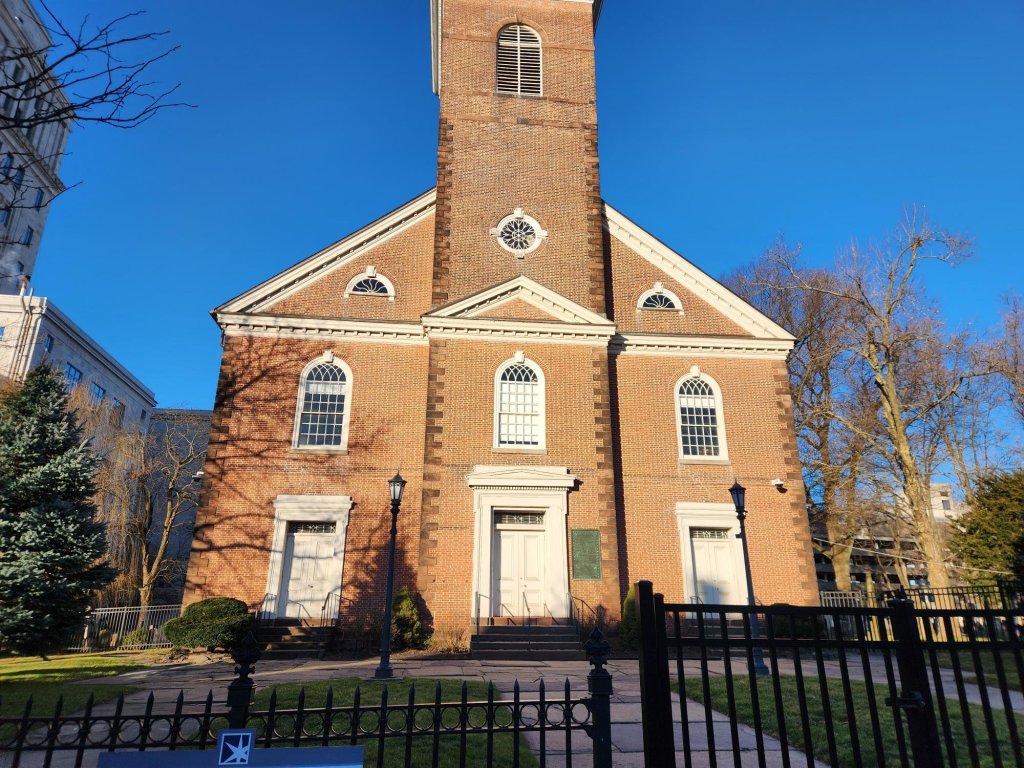
I walked down Broad Street to the First Presbyterian Church of Elizabeth. Built during colonial times, it contained a cemetery of faded tombstones. What was special about this church is that it was home to the Elizabethtown Academy (later named Snyder Academy). As noted by the sign in yard, Hamilton and Burr both attended school here, though not at the same time. While Hamilton enrolled here, Burr moved on to higher education (more on that later) in a different town. Though Burr did visit over the summer and may have bumped into a young Alexander.

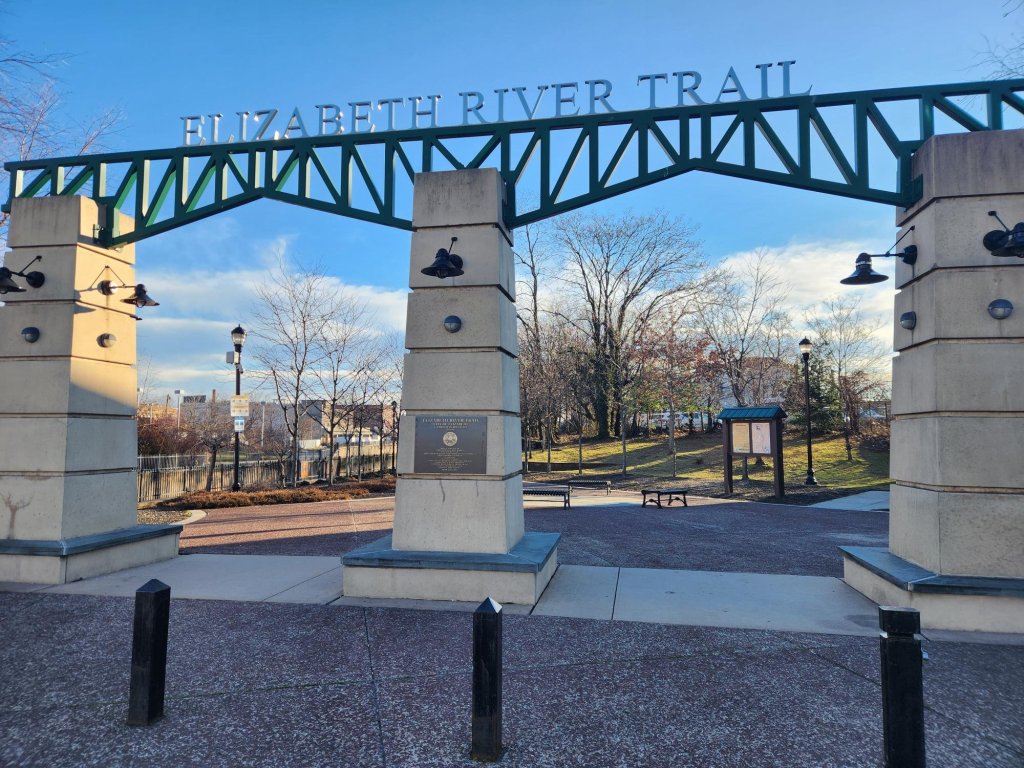
I headed south to the Elizabeth River which splits the downtown area and the residential area. The river flows from the Arthur Kill which separates NJ from Staten Island to bordering Essex County. The westside of Broad contain the Elizabeth River Trail park that ran alongside a stub of the river. The river itself was shallow and still that cold morning. It was paved trail that passed through a carpet of grass with bare trees. A youthful Burr once swam in this river back during colonial times. According to the sign at the entrance to the park, the river was where the city was founded back in 1664 which provided transport for ships, fishing, and swimming. The river would flood at times and was important in providing irrigation for the nearby farms. The city though has changed over last 350+ years, having become more urbanized. And floods + urban area=not good. In the 1970’s, walls were built on the sides, which resulted in recreational activities no longer allowed. The previous times I’ve been to Elizabeth, I have always crossed the river without a thought of how important it once was. I would pass by the trail park but not actually enter it. I’m glad the river got recognition as without it, the city wouldn’t have existed.
I’m glad to have been able to get to know the city better. My first few trips to Elizabeth since 2021 was to test out the waters of traveling on the NJ Transit to New Jersey which I have grown to love. I’m sort of a history nerd and it took that drive to explore areas I’ve overlooked. With my job here done, time to head on over to my next stop, Princeton. But before that, I stopped a Dunkin Donuts because my stomach was on E.
(Info taken from Sedgwick 46)
The Princeton and the Pauper
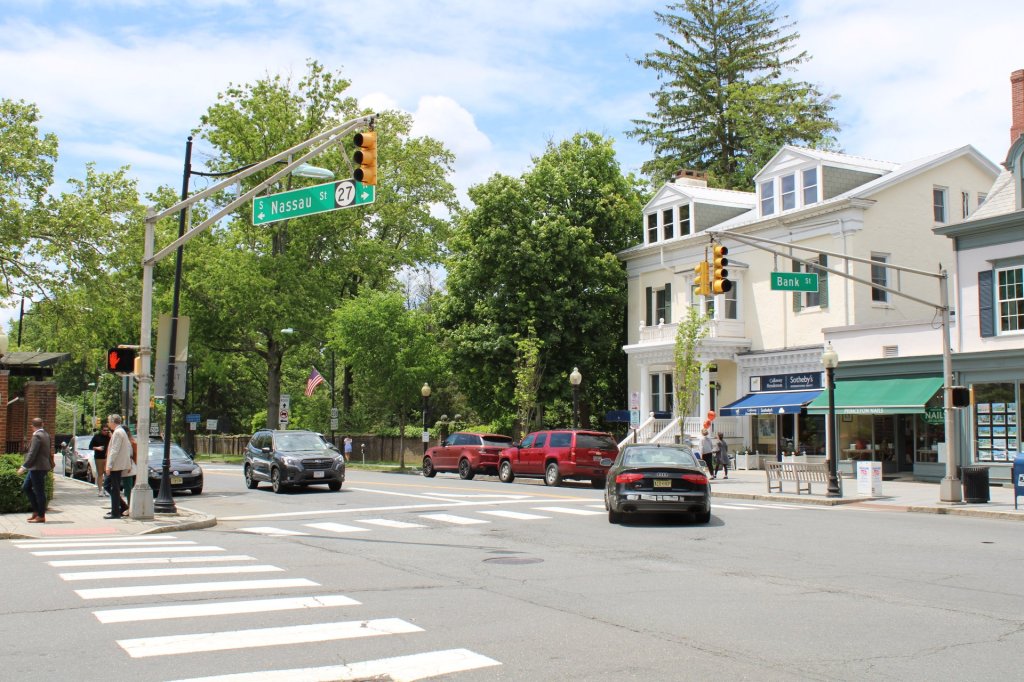
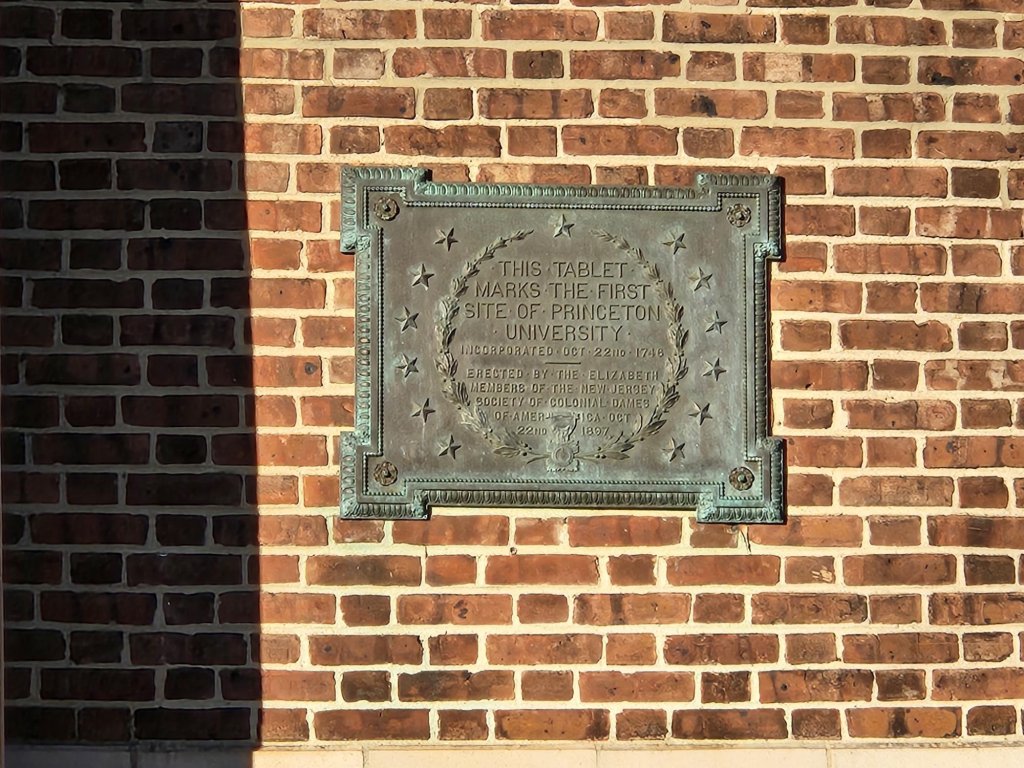
Getting to Princeton Station requires you to stop at Princeton Junction in neighboring West Windsor and transfer to the Princeton Shuttle for a five minute ride (The shortest railway in the country). It is nicknamed the “Dinky”. Sounds fun to say; “Dinky, dinky, dinky”. Got to kill those five minutes somehow. The train station was adjacent to Aaron Burr’s alma matter Princeton University then known as the College of New Jersey. Burr’s father Aaron Burr Sr., was one the founders and was the 2nd college president until his death in 1757. Interestingly, Princeton University was founded in Elizabeth in 1746. On one of the buildings on the First Presbyterian Church’s yard, makes note that it was the original site of the university. It moved to Newark the following year, then to Princeton in 1756. Burr Jr. was only thirteen when he started attending and got his bachelor’s degree at sixteen. A literal teenager took half the time to get a BA at an Ivy League compared to me at public universities. Anyways, I walked a few blocks to downtown Princeton. Most of the shops are on Nassau Street (NJ Route 27) and the surrounding streets. My main focus wasn’t to enjoy the Princeton Experience like the previous times. Instead it was to the north of downtown area to Princeton Cemetery. The cemetery was a large field filled with tombstones. Foxes wander in the area on occasion. It had the graves of US President Grover Cleveland, along with person of interest Vice President Aaron Burr. He was buried next to Princeton University presidents plot.


You’re probably wondering what was the conflict between the two was all about. I’ll try to explain it in the shortest way possible.
Political Conflict
Notes:
- Before the ratification of the 12th Amendment in 1803, electors were able to cast two electoral but no distinctions were made if the vote was for president or vice president. It resulted in the second place winner being picked as vice president. This ran a problem for the 1796 and 1800 elections.
- In majority of the states, candidates didn’t win the state by popular vote. The state’s legislatures voted for the electors instead.
- The Democratic-Republicans went by different names like the Jeffersonian or the Republican Party. The party is entirely separate from the current two political parties in the US.
A seed to the Hamilton-Burr conflict was planted when Aaron Burr won Phillip Schuyler’s seat for US Senator NY. Schuyler was Hamilton’s father in law. The conflict then began to escalate in the years to come.
The election of 1796 was the first election to involve political parties, the Federalists and the Democratic-Republicans. Federalists were in favor of a strong central government while the Republicans were against it. The two biggest contenders for the president that election year were John Adams (Federalist) and Thomas Jefferson (Dem-Rep). Hamilton was viewed as the leader of the Federalists who wanted to stop Jefferson from becoming president no matter what. His strategy was to persuade Federalist electors to vote equally between Adams and Thomas Pinckney (US Rep from South Carolina). It was a ploy by Hamilton to secretly vote in Pinckney, who was popular in the south where the Republicans dominated. The plan was to splinter votes away from Jefferson. During the election, candidate Aaron Burr revealed Hamilton’s plot through the use of spies to Adam maybe as a way of political damage. Adams and Madison (both from different parties) felt that Hamilton was trying to control the presidency. Hamilton’s plan backfired when the New England Federalists voted just for Adams which gave him 71 electoral votes, one more of the majority. Jefferson won second with 68, Pinckney third with 59, Burr fourth with 30.
(Info taken from Chernow 510-514, Sedgwick 254)
The election of 1800 was a rematch between Adams and Jefferson, but with Adams defeated. A problem arouse when Jefferson and Burr tied in the electoral college due to the pre-12th amendment rules still in place. Due to this, the House would break the tiebreaker and choose the president through state delegates. Despite political differences, Hamilton preferred Jefferson over Burr. Though the Federalists were in favor of Burr and wanted to make a deal taking advantage of Burr’s political ambitions for power and riches. They were more afraid of Jefferson’s somewhat irreligious beliefs and they thought as historian Ron Chernow puts it, “Better an opportunist than a dangerous ideologue…”. This made Hamilton worry that Burr would replace him as de facto leader of the Federalists. In the House, each of the sixteen states would cast one vote for president, with the winner receiving at least a majority of nine votes. For thirty-five ballots, the vote stalled with eight for Jefferson and six for Burr. Hamilton as a way to prevent a Burr presidency, sent letters to Delaware Federalist representative James A. Bayard constantly to point out Burr’s flaws in character. Despite Federalist pressure not to, Bayard withdrew his vote for Burr and submitted a blank vote for the thirty-sixth ballot. In turn, it helped Federalists hold requirement for Jefferson to win under conditions that Hamilton’s ideas for the economy are honored. Jefferson won the contingent election ten to four (South Carolina also voted blank). Burr was relegated to being Jefferson’s vice president.
(Info taken from Chernow 632-638)
Due to mistrust in Burr, Jefferson replaced Burr with outgoing New York governor George Clinton as his running mate in the upcoming 1804 election. Soon to leave office, Burr decided to run for governor of New York in the 1804 gubernatorial election in April. Burr wanted Jefferson to help defend him from political attacks from Hamilton’s sphere of influence. Though Jefferson was indifferent with Burr’s plea. Feeling rejected by his own Republican Party, he enlisted the help of Federalists along with disgruntled Republicans to aid him in gubernatorial race. Burr played around with the New England Federalists idea to unite New York with the rest of New England to secede from the US. This caused great concerned in Hamilton. The American Citizen newspaper would spear personal attacks against Burr’s character along with referencing his past collusion with the Federalists to discredit him among Republican voters and quoted Hamilton’s words that Burr was a traitor. Hamilton and other Federalists caucused in Albany to back up a Republican competitor for governor as Republicans had complete control of the state. Burr in the end lost heavily to his opponent Morgan Lewis. Burr narrowly won New York City but was outvoted by a large margin upstate. Hamilton was blamed by Burr’s supporters as causing his loss, but other notable people at that time denied the claim as Hamilton only had the support of so few Federalists.
(Info taken from Chernow 672-677)
The spark that ignited the duel happened at a dinner Hamilton attended in March 1804. He discussed with the guests negativity involving Burr. Dr. Charles Cooper, a physician who was in attendance wrote a letter to Hamilton’s father on how Hamilton and the other guests were defaming Burr as a “dangerous man and one who ought to not be trusted with the reins of government”. The letter appeared on the Albany Register newspaper which Burr would later read in June. Burr became furious and challenged Hamilton to a duel.
(Info taken from Chernow 680-683)
Weehawken Cliffs
July 11, 1804, the day of the duel. It took place in Weehawken due to New Jersey’s more lenient laws against dueling compared to New York. The dueling grounds was up the cliff just off Boulevard East. From the light rail station, I climbed a metal staircase up. The Weehawken area around the spot was a typical suburban neighborhood, which was a different world compared to early 19th century Weehawken. Below the cliff was originally water and a beach during low tide. Now it’s a lower extension of Weehawken with roads, buildings, and other modern developments. The cliff top then was a secluded area surrounded by trees. The spot the total opposite as it can be clearly seen due to the American flag on the flag pole. A bust of Hamilton decorates the area like a “Hamilton was here” sign. Both dueling parties arrived at early dawn by boats from Manhattan for their fated duel from years of build up. They took their place and a fire was shot. Their is debate who shot first, but in the end Hamilton was mortally wounded. Hamilton died the next day in Manhattan. The duel didn’t just their conflict, it ended their lives. Hamilton his physical life and Burr his political life. Burr would never hold office after that moment. He would be arrested on possibility of treason in 1807 for being accused of leading a conspiracy to form a new country in southwestern US. Burr died on September 14, 1836 in Staten Island. Manhattan skyline looms over the spot like a ghost, forever watching the ground it’s two “sons” fought.
(Info taken from Chernow 700-709)
Final Thoughts
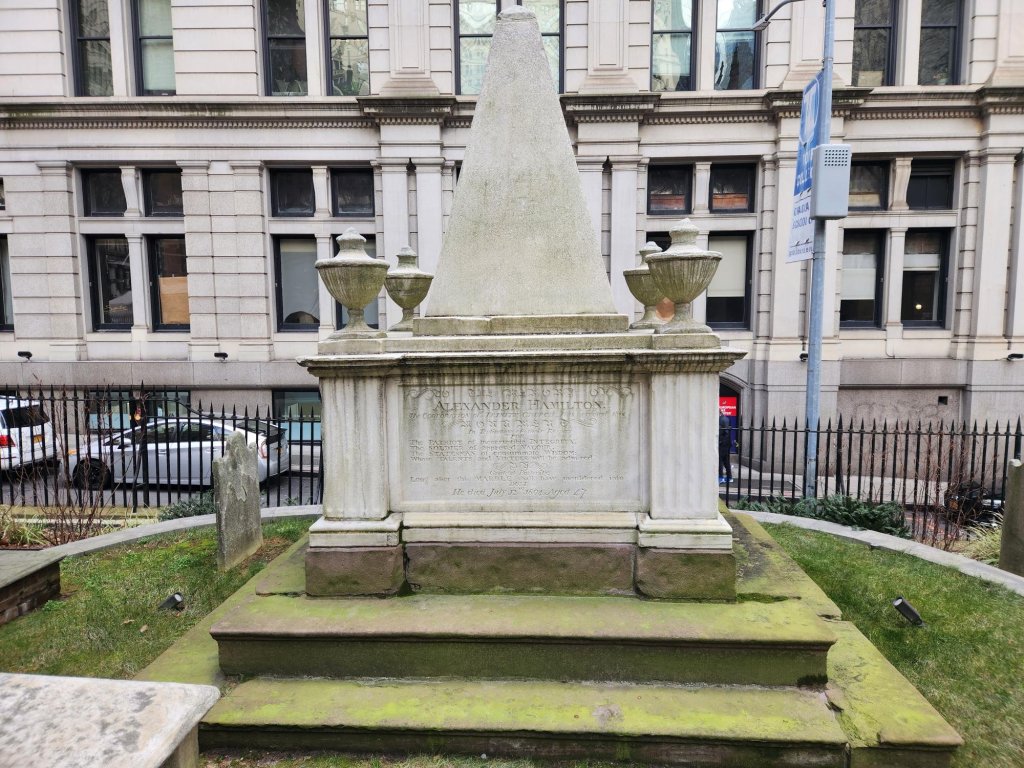
Hamilton is buried in the cemetery at Trinity Church in lower Manhattan. His wife Elizabeth “Eliza” Hamilton who was a widow for fifty years is buried next to him. As a cemetery located in a church backyard in Manhattan, the frequent visitors have a convenient chance to visit his burial spot. Hamilton had places named after him and a Broadway play to grow his posthumous popularity. This is in contrast to Burr’s grave in Princeton Cemetery. As Princeton is a small suburban community in New Jersey, not many non-residents have a chance to visit his tomb. Most people visiting Princeton usually stop at its famous university and the downtown area directly south and away from the cemetery.

General consensus seem to paint Burr as a villain and Hamilton as a victim. To me, both men were victim’s of the political system of their time. Both men had their flaws which lead them to make consequential choices in their careers while also contributing to American society. Hamilton founded the New York Evening Post (now known as New York Post) which is still in print and helped ratify the constitution through writing the Federalist Papers. Burr believed in the equality of women, even raising his daughter with an education that was reserved for men. Their biggest mistake in my opinion was getting in each others way. Their political ambition helped destroy themselves rather than advance themselves forward. People today would always say that politics was civil back then, but I disagree. Personal attacks drove the two men to duel. The Hamilton-Burr duel should be a lesson to us all to not take attacks personal and to avoid the political system tactics to sway us to bring the worse within us.
(Info taken from Sedgwick 160)
Ephesians 4:31–32 (ESV): “31 Let all bitterness and wrath and anger and clamor and slander be put away from you, along with all malice. 32 Be kind to one another, tenderhearted, forgiving one another, as God in Christ forgave you.”
Special Thanks for these Sources of Information:
Alexander Hamilton by Ron Chernow
War of Two by John Sedgwick
 Sam Writes LI
Love it!!!
LikeLike
Tu eres un excelente escrito, estoy muy orgullosa de lo que has logrado,Dios guia tus pasos,te amo mucho.
LikeLike