-
Travel Blog: Hamilton-Burr Feud

by Samuel Encarnacion

The Start of It All
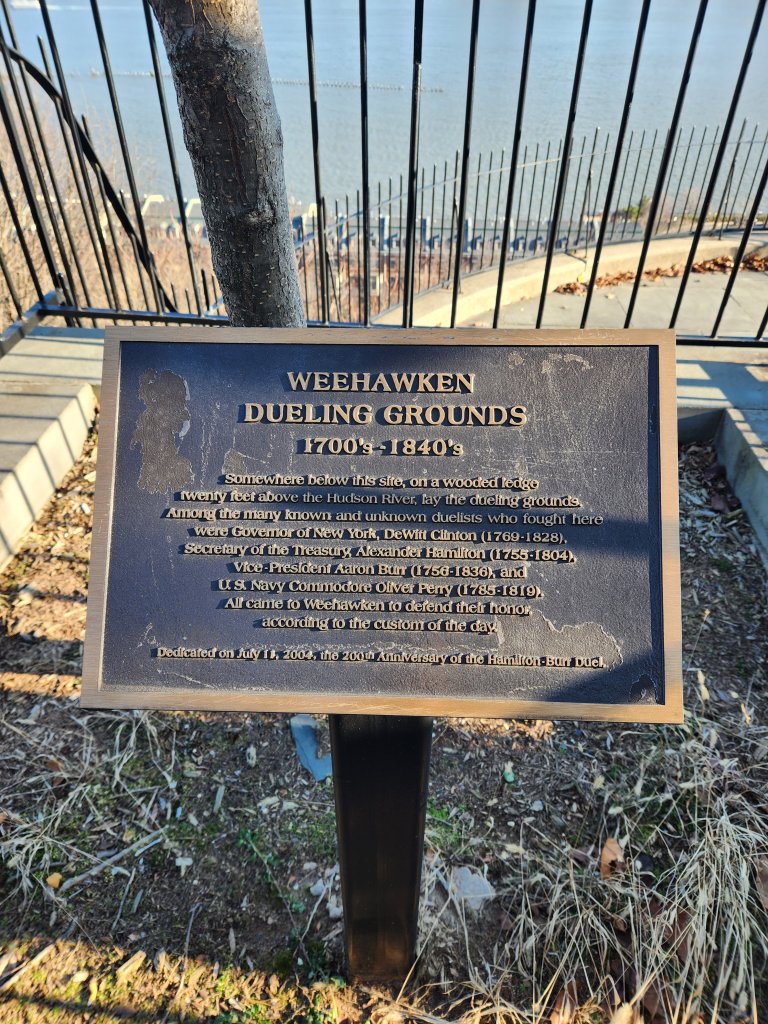
The last week of 2022, I climbed up the Palisades cliffs in Weehawken, New Jersey. Manhattan was in view beyond the Hudson. Traffic was light above and below the cliff. I wanted to see the “spot”. The spot was home to a famous duel that took place one summer in 1804. A battle between two politicians to “restore their honor”. The Weehawken Dueling Ground were Alexander Hamilton and Aaron Burr Jr “settled” their dispute.

The Players
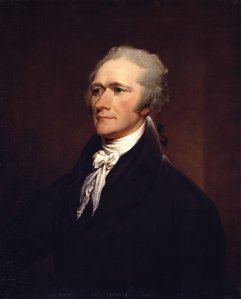
Hamilton: 1st Secretary of Treasury (1789-1795), victim?
Party: Federalist
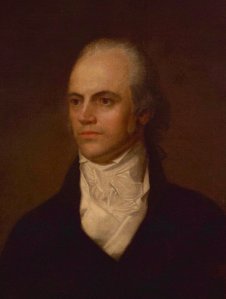
Burr: 3rd Vice President (1801-1805), US Senator NY (1791-1797), villain?
Party: Democratic-Republican
Take Me Down to Elizabethtown
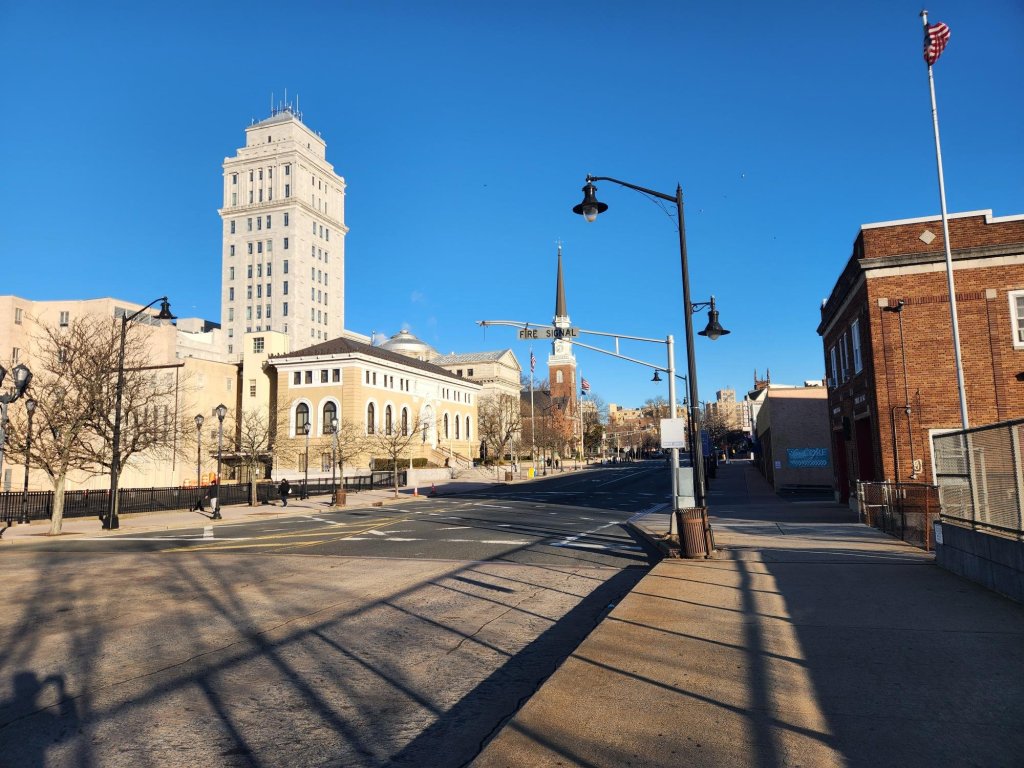
Downtown Elizabeth from Broad Street Bridge Wanting to take advantage of the sunny day of January 18 (because cloudy days are depressing), I woke up early in my Long Island home to catch the early train to Penn Station fueled by only a few hours of sleep and a cereal bar. My first destination, Elizabeth (known as Elizabethtown until 1855), New Jersey’s fourth largest city. It was the childhood home to Aaron Burr who was born in neighboring Newark.
I walked to the front car assuming that only the first car opened like the previous times I’ve stopped at Elizabeth Station. Most of the platform southbound toward Trenton was under construction. Though by this time, the platform was complete. The station itself, a different story. The NJ Transit station was built next to old Elizabeth Station of the former Central Railroad of New Jersey, which was converted into a restaurant. Under the rails, a stub of the old tracks which also bypass Broad Street can be seen, rotted and rusted by the years of abandonment.
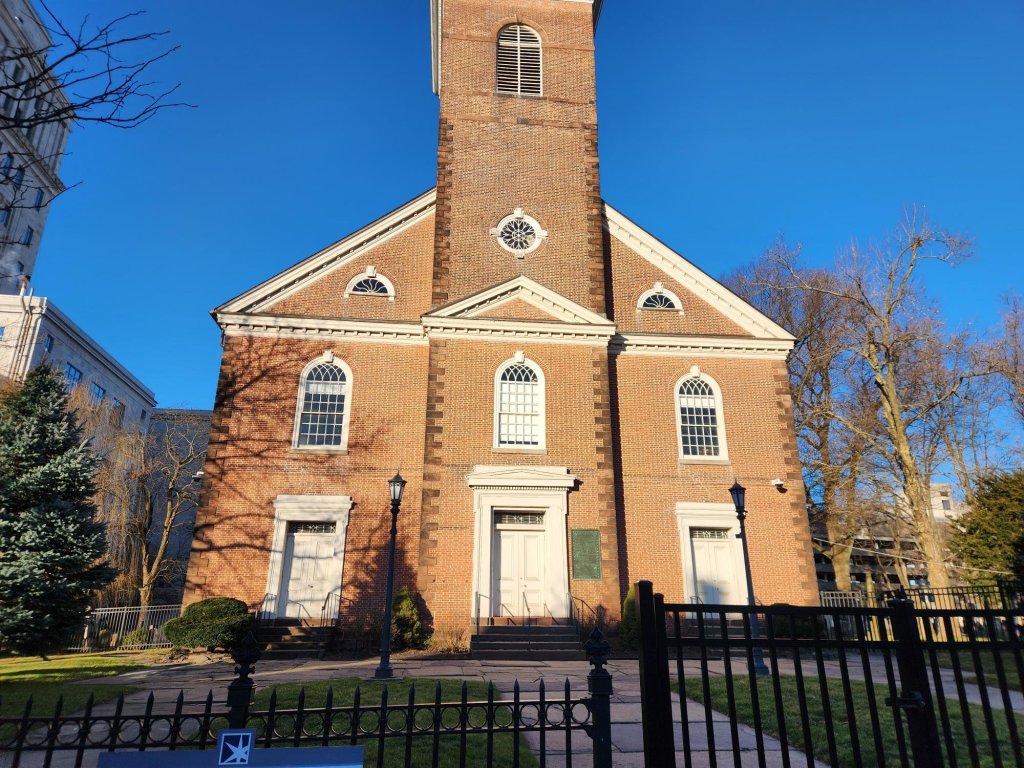
I walked down Broad Street to the First Presbyterian Church of Elizabeth. Built during colonial times, it contained a cemetery of faded tombstones. What was special about this church is that it was home to the Elizabethtown Academy (later named Snyder Academy). As noted by the sign in yard, Hamilton and Burr both attended school here, though not at the same time. While Hamilton enrolled here, Burr moved on to higher education (more on that later) in a different town. Though Burr did visit over the summer and may have bumped into a young Alexander.

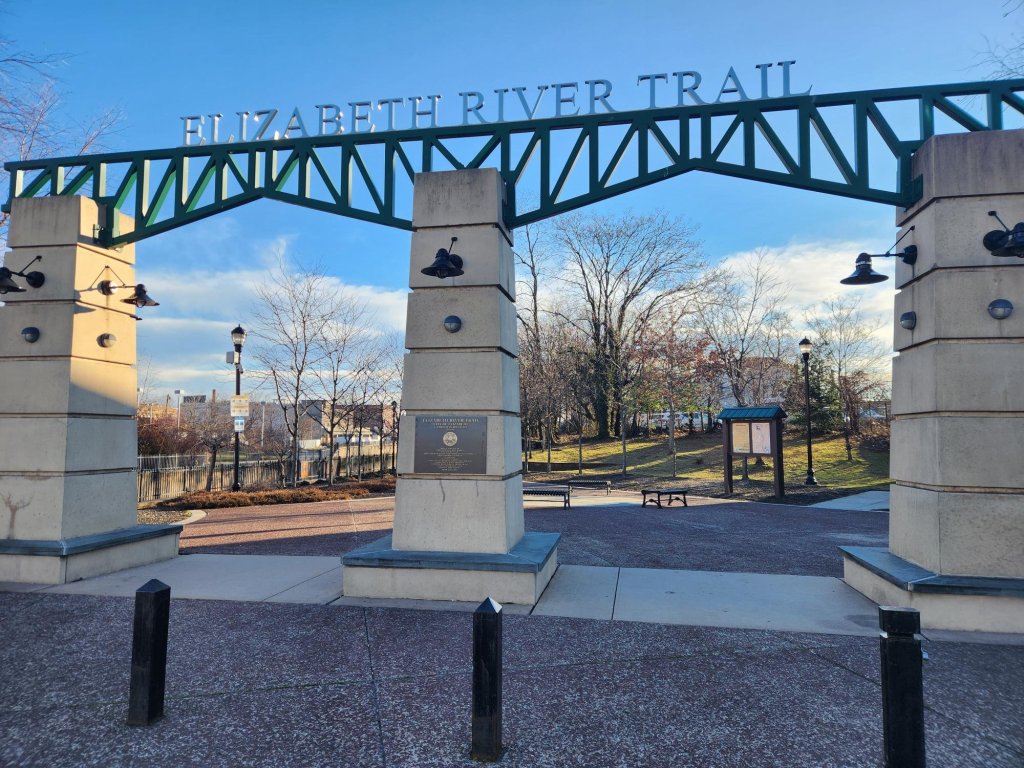
I headed south to the Elizabeth River which splits the downtown area and the residential area. The river flows from the Arthur Kill which separates NJ from Staten Island to bordering Essex County. The westside of Broad contain the Elizabeth River Trail park that ran alongside a stub of the river. The river itself was shallow and still that cold morning. It was paved trail that passed through a carpet of grass with bare trees. A youthful Burr once swam in this river back during colonial times. According to the sign at the entrance to the park, the river was where the city was founded back in 1664 which provided transport for ships, fishing, and swimming. The river would flood at times and was important in providing irrigation for the nearby farms. The city though has changed over last 350+ years, having become more urbanized. And floods + urban area=not good. In the 1970’s, walls were built on the sides, which resulted in recreational activities no longer allowed. The previous times I’ve been to Elizabeth, I have always crossed the river without a thought of how important it once was. I would pass by the trail park but not actually enter it. I’m glad the river got recognition as without it, the city wouldn’t have existed.
I’m glad to have been able to get to know the city better. My first few trips to Elizabeth since 2021 was to test out the waters of traveling on the NJ Transit to New Jersey which I have grown to love. I’m sort of a history nerd and it took that drive to explore areas I’ve overlooked. With my job here done, time to head on over to my next stop, Princeton. But before that, I stopped a Dunkin Donuts because my stomach was on E.
(Info taken from Sedgwick 46)
The Princeton and the Pauper
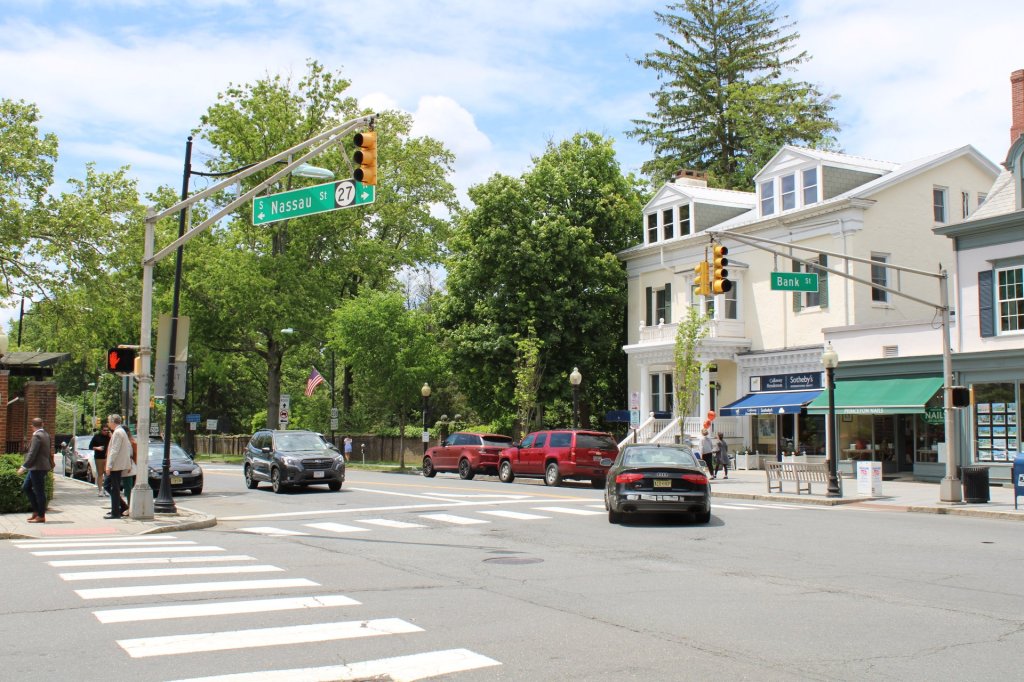
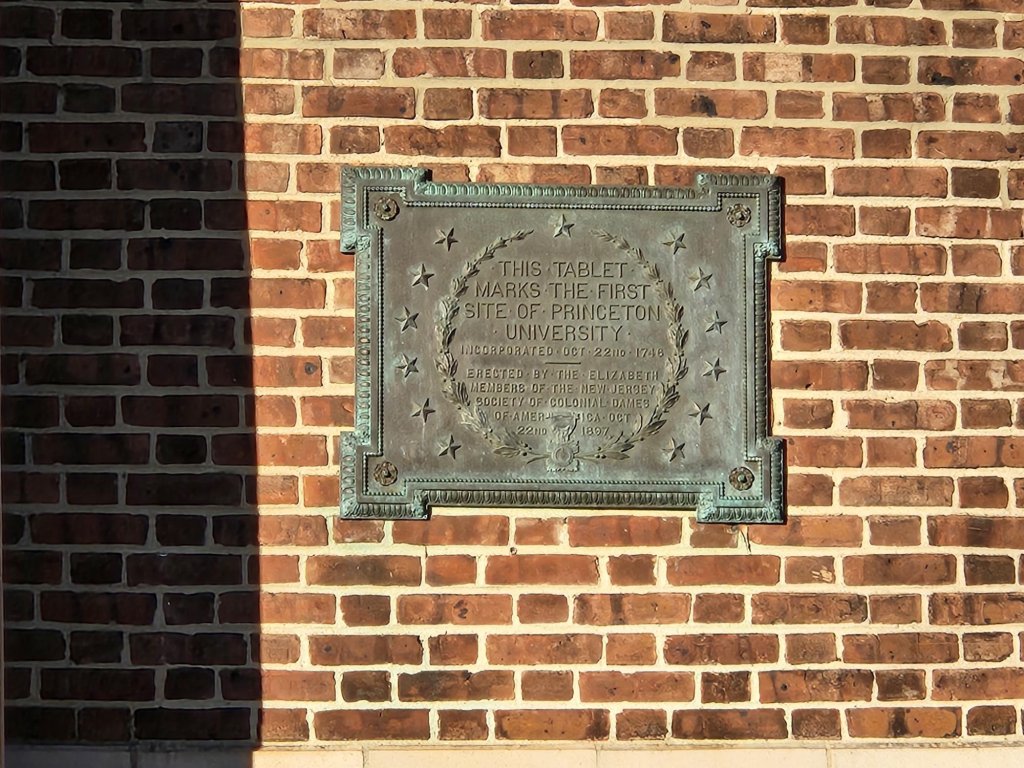
Downtown Princeton (taken in Spring 2022) Getting to Princeton Station requires you to stop at Princeton Junction in neighboring West Windsor and transfer to the Princeton Shuttle for a five minute ride (The shortest railway in the country). It is nicknamed the “Dinky”. Sounds fun to say; “Dinky, dinky, dinky”. Got to kill those five minutes somehow. The train station was adjacent to Aaron Burr’s alma matter Princeton University then known as the College of New Jersey. Burr’s father Aaron Burr Sr., was one the founders and was the 2nd college president until his death in 1757. Interestingly, Princeton University was founded in Elizabeth in 1746. On one of the buildings on the First Presbyterian Church’s yard, makes note that it was the original site of the university. It moved to Newark the following year, then to Princeton in 1756. Burr Jr. was only thirteen when he started attending and got his bachelor’s degree at sixteen. A literal teenager took half the time to get a BA at an Ivy League compared to me at public universities. Anyways, I walked a few blocks to downtown Princeton. Most of the shops are on Nassau Street (NJ Route 27) and the surrounding streets. My main focus wasn’t to enjoy the Princeton Experience like the previous times. Instead it was to the north of downtown area to Princeton Cemetery. The cemetery was a large field filled with tombstones. Foxes wander in the area on occasion. It had the graves of US President Grover Cleveland, along with person of interest Vice President Aaron Burr. He was buried next to Princeton University presidents plot.

Nassau Hall, Princeton University 
You’re probably wondering what was the conflict between the two was all about. I’ll try to explain it in the shortest way possible.
Political Conflict
Notes:
- Before the ratification of the 12th Amendment in 1803, electors were able to cast two electoral but no distinctions were made if the vote was for president or vice president. It resulted in the second place winner being picked as vice president. This ran a problem for the 1796 and 1800 elections.
- In majority of the states, candidates didn’t win the state by popular vote. The state’s legislatures voted for the electors instead.
- The Democratic-Republicans went by different names like the Jeffersonian or the Republican Party. The party is entirely separate from the current two political parties in the US.
A seed to the Hamilton-Burr conflict was planted when Aaron Burr won Phillip Schuyler’s seat for US Senator NY. Schuyler was Hamilton’s father in law. The conflict then began to escalate in the years to come.
The election of 1796 was the first election to involve political parties, the Federalists and the Democratic-Republicans. Federalists were in favor of a strong central government while the Republicans were against it. The two biggest contenders for the president that election year were John Adams (Federalist) and Thomas Jefferson (Dem-Rep). Hamilton was viewed as the leader of the Federalists who wanted to stop Jefferson from becoming president no matter what. His strategy was to persuade Federalist electors to vote equally between Adams and Thomas Pinckney (US Rep from South Carolina). It was a ploy by Hamilton to secretly vote in Pinckney, who was popular in the south where the Republicans dominated. The plan was to splinter votes away from Jefferson. During the election, candidate Aaron Burr revealed Hamilton’s plot through the use of spies to Adam maybe as a way of political damage. Adams and Madison (both from different parties) felt that Hamilton was trying to control the presidency. Hamilton’s plan backfired when the New England Federalists voted just for Adams which gave him 71 electoral votes, one more of the majority. Jefferson won second with 68, Pinckney third with 59, Burr fourth with 30.
(Info taken from Chernow 510-514, Sedgwick 254)
The election of 1800 was a rematch between Adams and Jefferson, but with Adams defeated. A problem arouse when Jefferson and Burr tied in the electoral college due to the pre-12th amendment rules still in place. Due to this, the House would break the tiebreaker and choose the president through state delegates. Despite political differences, Hamilton preferred Jefferson over Burr. Though the Federalists were in favor of Burr and wanted to make a deal taking advantage of Burr’s political ambitions for power and riches. They were more afraid of Jefferson’s somewhat irreligious beliefs and they thought as historian Ron Chernow puts it, “Better an opportunist than a dangerous ideologue…”. This made Hamilton worry that Burr would replace him as de facto leader of the Federalists. In the House, each of the sixteen states would cast one vote for president, with the winner receiving at least a majority of nine votes. For thirty-five ballots, the vote stalled with eight for Jefferson and six for Burr. Hamilton as a way to prevent a Burr presidency, sent letters to Delaware Federalist representative James A. Bayard constantly to point out Burr’s flaws in character. Despite Federalist pressure not to, Bayard withdrew his vote for Burr and submitted a blank vote for the thirty-sixth ballot. In turn, it helped Federalists hold requirement for Jefferson to win under conditions that Hamilton’s ideas for the economy are honored. Jefferson won the contingent election ten to four (South Carolina also voted blank). Burr was relegated to being Jefferson’s vice president.
(Info taken from Chernow 632-638)
Due to mistrust in Burr, Jefferson replaced Burr with outgoing New York governor George Clinton as his running mate in the upcoming 1804 election. Soon to leave office, Burr decided to run for governor of New York in the 1804 gubernatorial election in April. Burr wanted Jefferson to help defend him from political attacks from Hamilton’s sphere of influence. Though Jefferson was indifferent with Burr’s plea. Feeling rejected by his own Republican Party, he enlisted the help of Federalists along with disgruntled Republicans to aid him in gubernatorial race. Burr played around with the New England Federalists idea to unite New York with the rest of New England to secede from the US. This caused great concerned in Hamilton. The American Citizen newspaper would spear personal attacks against Burr’s character along with referencing his past collusion with the Federalists to discredit him among Republican voters and quoted Hamilton’s words that Burr was a traitor. Hamilton and other Federalists caucused in Albany to back up a Republican competitor for governor as Republicans had complete control of the state. Burr in the end lost heavily to his opponent Morgan Lewis. Burr narrowly won New York City but was outvoted by a large margin upstate. Hamilton was blamed by Burr’s supporters as causing his loss, but other notable people at that time denied the claim as Hamilton only had the support of so few Federalists.
(Info taken from Chernow 672-677)
The spark that ignited the duel happened at a dinner Hamilton attended in March 1804. He discussed with the guests negativity involving Burr. Dr. Charles Cooper, a physician who was in attendance wrote a letter to Hamilton’s father on how Hamilton and the other guests were defaming Burr as a “dangerous man and one who ought to not be trusted with the reins of government”. The letter appeared on the Albany Register newspaper which Burr would later read in June. Burr became furious and challenged Hamilton to a duel.
(Info taken from Chernow 680-683)
Weehawken Cliffs
July 11, 1804, the day of the duel. It took place in Weehawken due to New Jersey’s more lenient laws against dueling compared to New York. The dueling grounds was up the cliff just off Boulevard East. From the light rail station, I climbed a metal staircase up. The Weehawken area around the spot was a typical suburban neighborhood, which was a different world compared to early 19th century Weehawken. Below the cliff was originally water and a beach during low tide. Now it’s a lower extension of Weehawken with roads, buildings, and other modern developments. The cliff top then was a secluded area surrounded by trees. The spot the total opposite as it can be clearly seen due to the American flag on the flag pole. A bust of Hamilton decorates the area like a “Hamilton was here” sign. Both dueling parties arrived at early dawn by boats from Manhattan for their fated duel from years of build up. They took their place and a fire was shot. Their is debate who shot first, but in the end Hamilton was mortally wounded. Hamilton died the next day in Manhattan. The duel didn’t just their conflict, it ended their lives. Hamilton his physical life and Burr his political life. Burr would never hold office after that moment. He would be arrested on possibility of treason in 1807 for being accused of leading a conspiracy to form a new country in southwestern US. Burr died on September 14, 1836 in Staten Island. Manhattan skyline looms over the spot like a ghost, forever watching the ground it’s two “sons” fought.
(Info taken from Chernow 700-709)
Final Thoughts
Hamilton is buried in the cemetery at Trinity Church in lower Manhattan. His wife Elizabeth “Eliza” Hamilton who was a widow for fifty years is buried next to him. As a cemetery located in a church backyard in Manhattan, the frequent visitors have a convenient chance to visit his burial spot. Hamilton had places named after him and a Broadway play to grow his posthumous popularity. This is in contrast to Burr’s grave in Princeton Cemetery. As Princeton is a small suburban community in New Jersey, not many non-residents have a chance to visit his tomb. Most people visiting Princeton usually stop at its famous university and the downtown area directly south and away from the cemetery.
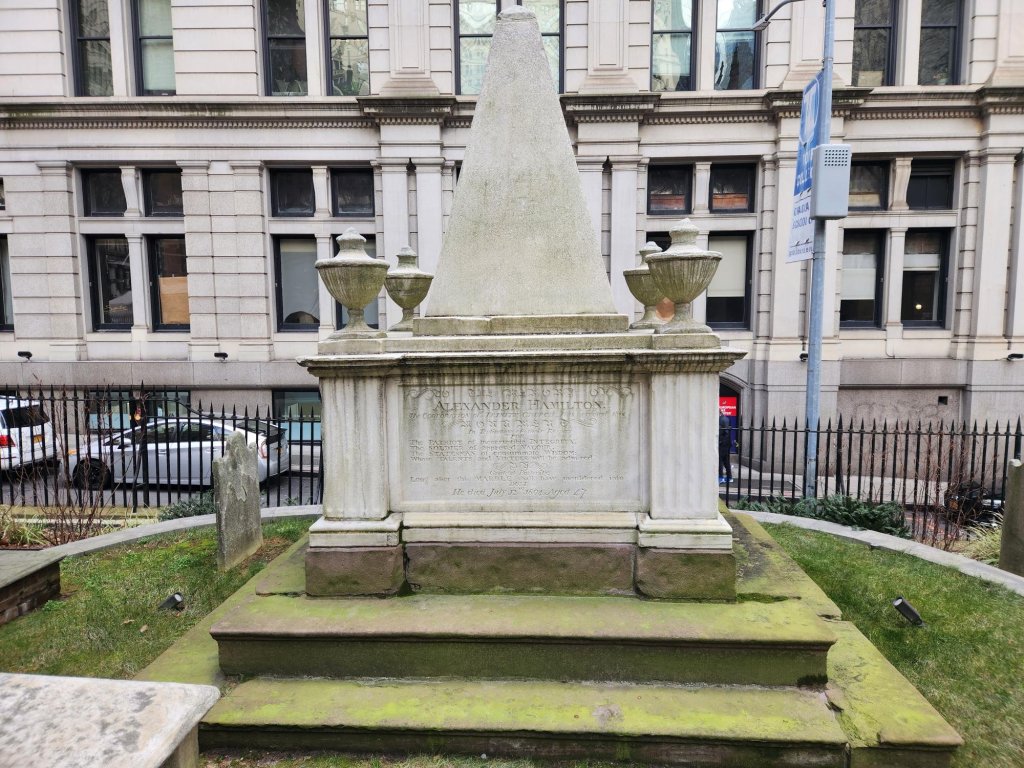
Hamilton’s grave 
Burr’s grave General consensus seem to paint Burr as a villain and Hamilton as a victim. To me, both men were victim’s of the political system of their time. Both men had their flaws which lead them to make consequential choices in their careers while also contributing to American society. Hamilton founded the New York Evening Post (now known as New York Post) which is still in print and helped ratify the constitution through writing the Federalist Papers. Burr believed in the equality of women, even raising his daughter with an education that was reserved for men. Their biggest mistake in my opinion was getting in each others way. Their political ambition helped destroy themselves rather than advance themselves forward. People today would always say that politics was civil back then, but I disagree. Personal attacks drove the two men to duel. The Hamilton-Burr duel should be a lesson to us all to not take attacks personal and to avoid the political system tactics to sway us to bring the worse within us.
(Info taken from Sedgwick 160)
Ephesians 4:31–32 (ESV): “31 Let all bitterness and wrath and anger and clamor and slander be put away from you, along with all malice. 32 Be kind to one another, tenderhearted, forgiving one another, as God in Christ forgave you.”
Special Thanks for these Sources of Information:
Alexander Hamilton by Ron Chernow
War of Two by John Sedgwick
-
Short Story: Creature from the Palisades

By Samuel Encarnacion

Early morning traffic on Boulevard East was calm, which routed cars and pedestrians on the edge of the Palisades cliffs in Weehawken, New Jersey. The cliff overlooked the eastern lower Weehawken streets which laid in front of the Hudson River and the Manhattan skyline beyond it. One way for pedestrians to travel directly up the cliff was through a metal staircase on Pershing Road, which avoided long travel, having to follow the inclined road northbound. Peace broke when a woman was found dead on the staircase.
Thirty-four year old Jessica Smith was the victim. A Weehawken resident reported that she never showed up to her house all night. Noticeable marks were found around her neck by forensics. The marks were circles left by suction cups from an octopus’ tentacles. Broken neck was ruled as the cause of death.
A local resident was jogging along the boulevard around midnight when he saw the woman on the staircase. She looked around, stepped up and down the flight of stairs.
“You need help?”, said the man.
“I’m coming down, dear.” Jessica ignored the man as she walked down.
Due to investigation, the staircase was blocked off on both ends. Residents were obligated to take alternative routes to upper Weehawken, much to frustration of people who preferred a quick route up. It didn’t stop Marcus Taylor from climbing up the staircase days later.
Marcus was a lower Weehawken resident who lived on Port Imperial near Pershing Road. He was a thirty-six year old stock broker at American Financial Co. located in Jersey City’s Exchange Place. He lived with his wife Chelsea, whom he met on his first job on Wall Street across the river. Married for ten years, they were looked at with admiration at the brokerage office for their stable marriage. Chelsea was nicknamed Esme (short for Esmeralda) by their coworkers for her distinctive green eyes.
For their tenth anniversary, they went to Long Island Hotel & Casino by the LIE’s exit 58.
At the casino, Marcus and Chelsea focused on their game of roulette. Their stack of chips decreased as the game went on until Marcus pile was no more. Chelsea placed her last five chips on the 00 space. Marcus gave her extra money for ten more chips as good luck. The ball landed on the 00. She jumped and embraced Marcus and gave him a big kiss.
“I love you, honey!” Chelsea went back to kissing Marcus.
The hotel had formal gala night, their wedding song played as they danced. Marcus ordered a big bottle of champagne at the table. Marcus would frequently pour into Chelsea’s glass as in her excitement drank through multiple glasses of champagne until she got intoxicated. Tipsy, he escorted her to their room. She stumbled across the room to the bathroom. As she changed to her night clothes, Marcus gathered a few personal belongings into his backpack. When Chelsea came out, Marcus guided her to bed and kissed her forehead.
“I love you honey, you’re…you’re best husband. Can’t imagine my…my…life,” Chelsea continued to mumble words until she dozed off completely.
Marcus danced as he walked out of the hotel. He got on a LIRR train bound to Penn Station, from there he rode the ferry to Weehawken to his apartment. He grabbed contraceptives from the bedside drawer along with Chelsea’s expensive perfume and inserted them into his bag. He ran out to the staircase on Pershing, and called his coworker Maria.
“Hey, I’m on my way.”
“What about the wife?”
“I left her drunk on Long Island. She’ll never suspect that I was gone.”
“Ouch. The usual staircase on Pershing is blocked to due to investigation. Go the long way. Love you!” Maria hung up.
Maria worked alongside Marcus and Chelsea at the brokerage firm. She and Chelsea had a rivalry as Maria would try to persuade clients away from Chelsea. She began her secret relationship with Marcus after he sent Chelsea to the spa for her birthday earlier that year.
Like that will stop me. Marcus uttered in his mind as he saw the barrier and climbed around it. He had a slow pace as he shivered up from the view of the depth below. The phone began to ring, which stopped him to lower the volume. No caller ID or number. Ugh! He declined the call and continued on.
“Honey, do you love me?”, a voice that resembled Chelsea’s spoke. Marcus turned around. Nobody.
Again the voice spoke, “You knew I was weak to liquor. You let me be intoxicated and then abandoned me.”
“Shut up.” Marcus kept climbing.
“You want to leave me? Come down. Talk to me.”
Marcus went down a few steps to clear his conscience. As he went, a group of teenagers also found their way around the barrier and were on the staircase. His anger arouse.
“You think this is funny. I have a date and your messing it up for me.”
“The hell is your problem. We did nothing.” Marcus gave the teenager the finger. In retaliation, one of the teenagers threw a water bottle at him and soaked his shirt.
“I’ll call the police.”
“Says the idiot who is trespassing.” The teenagers walked down grumbling.
Maria called his phone.
“What’s taking so long?” She questioned.
“I heard my wife and came down the stairs, bunch of teenagers hassled me-”
“Look if you want to run back to those worn out parts, don’t waste my time. Thought you wanted a new experience.”
Marcus affirmed his decision to meet up with Maria, ran up the stairs. At the top, Marcus took the garbage can that was on the top platform and flipped it upside down to climb over the barrier. He ran across the street into Maria’s house. The door was slightly opened.
“Maria.” No response.
He dialed the phone which went to voicemail. Marcus began to climb the stairs towards her room. Midway, he heard Chelsea spoke again. He turned around and she stood in front of him in her night clothing. She had tears in her eyes as she approached Marcus. She planted her face on his chest and guided her hand down his cheek.
“Don’t do this.”
She continued her cry on his chest mixed with soft kisses. He grabbed her arms and pushed her backwards down the flight of stairs.
“I hate you, whore! Go home! I don’t want you.”
Chelsea got up from the floor.
“You have sealed your fate,” she spoke in a deep voice. Chelsea transformed into humanoid octopus. The octopus was around Marcus height of six feet. The smooth skinned body was entirely red except for the black beak. The eyes were the typical look for an octopus, with a black slit for pupils. The head was bulbous in appearance, while the four limbs had suckers throughout the entire length.
Marcus tripped on the stairs when his stepped on his other foot as he fled with only on shoe. He entered Maria’s room where Maria was also out of sight. He crawled under the bed as the door was forced open by the creature. It’s right limb grew in length and grabbed Marcus’ leg and dragged him out.
“That’s how you treat your wife, for a harlot,” the creature spat in Marcus’ upside down face.
“Where’s Maria? I swear if you touch her-”
“I did,” in soft whisper.
The creature opened the closet. Maria was tied up with rope like material made from octopus tentacles. She wiggled around in vain to break free.
The creature knocked out both Marcus and Maria with the other tentacle arm. When they awoke, both were tied up on top of the platform on the staircase by the cliff.
“You both aren’t the first ones I caught in adultery.”
“Leave us alone,” Maria said. “You don’t get our human ways.”
“I was once what you are now. Except I know the pain.”
“I made a huge mistake. I will go back to my wife.” Marcus reasoned to the creature in a last ditch effort.
“If you had remorse, you wouldn’t have pushed me down the stairs. Besides, I’ve watched you from these cliffs. How you embraced your wife in public but slept with a harlot in private for months.” the creature wrapped the suckers from his arms around both of their necks.
“Don’t move or your neck will snap like the last one,” muffled by black ink, they both screamed as the creature pulled the suckers off the necks, leaving red marks all around.
“Hope you don’t mind me borrowing your safe key, Maria. I’ll keep your money for safe keeping.”
The barrier on the top platform was removed and a rock is thrown at the nearby police car on the Boulevard. The creature jumped off the rail and the tentacles ropes dried to the hardness of cheese puffs. The police officer ran to Marcus and Maria and witnessed the couple laid down in undergarments.
Weehawken residents woke to the news of a couple who “committed” sex acts on a crime scene. Residents recognized Marcus who was well known as a happily married man. The American Financial office consoled Chelsea who was abandoned by her unfaithful husband in a Long Island hotel while intoxicated. Maria and Marcus were let go from the company and faced criminal penalties for their trespassing. Their argument that an “octopus” laid them their bound was ignored by the court.
It later be discovered that Jessica Smith the victim found on the stairs, was on her way to cheat on her husband with a Hudson County official. The staircase became known Adulterer’s Alley. An urban legend spread around that unfaithful people will reap the consequences if they climbed up the stairs. The sucker marks was said to be given the devil to those heinous enough to cheat on their spouse to denote who belonged to him. The more rational answer explained that it was a type of new fashion trend.
One year later, Chelsea arrived at her apartment with shopping bags and her recently newborn child in a child basket. On the floor by the apartment door, laid a box with a note on the lid.
The note read;
Dear Chelsea,
I hope you are holding up after all this time. I’ve enclosed some money to help cover your costs with raising your child. You’ll be a great mother, someone out there will truly love you. I’ve seen your tears, don’t give up hope.
-Your neighbor by the cliff
-
Travel Blog: Statue of Liberty

September 18, 2022

What is Liberty? Ask different and you get different answers. Liberty/freedom is thrown into discussions in the United States. Who is allowed to give it? Is too much of it a bad thing? Can it paradoxically infringe another person’s?
Questions I had after I of visited Liberty Island for the first time in my life on September 14, 2022. I went to the city were an outpouring of people go visit in order to get to the island. I hopped on the Hudson-Bergen Light Rail in Jersey City, from Newport to Liberty Park Station. New York City and its metro are a little clichéd. The walk from the station to the ferry following along Audrey Zapp Drive was quite a distance (about a mile). (NJ government, please build a trolley). You can do important activities along the way, like getting exercise, planning your visit to Liberty/Ellis Island, catching up on two episodes of SpongeBob. Use time wisely!
The tickets were bought at the now decaying terminal for the Central Railroad of New Jersey. (I have more to talk about the terminal in the near future). The boat was labeled Miss New Jersey, the fact that someone lost the pageant to a boat is quite sad. The boat arrived first to Ellis Island, then Liberty Island, then back to Liberty State Park directly. On the boat, I bought a bottle of Sprite (because I earned it for walking a mile) and a three inch keychain of the Statue of Liberty that was $6.20. About $2.07 for every inch. Like that fish from SpongeBob said, “It’s worth every penny”. On the top deck, got to see the famous universal green oxidized symbol of freedom up close for the first time, as I disembarked. My first stop was to take an audio tour speaker, the one that you hold to your ear as you go along to different areas. I only used it twice before I had a “Forget It” type feeling. Too much work!
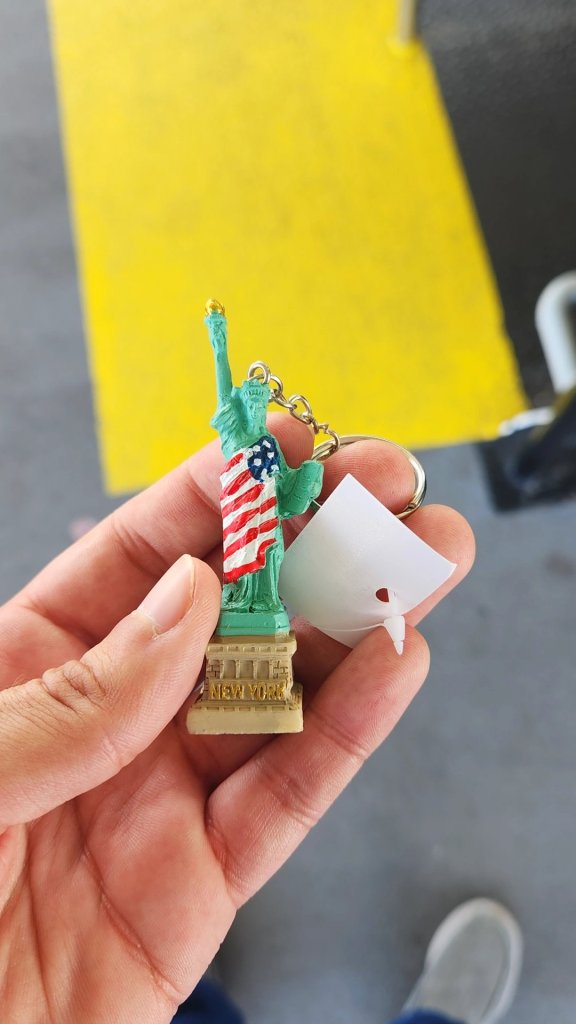
$6.50! Museum
The small museum on the island talked about the history and construction of the Statue. One exhibit had memorabilia about the lasting impact of the Statue of Liberty. The Statue inspired the Goddess of Democracy statue made of paper-mache that was made during the anti-government protests in Tiananmen Square and later destroyed by the Chinese government.
The “main” attraction of the museum is the original now glass paneled torch that was replaced for being irreparable which strayed from Bartholdi’s the designer’s original vision of a gilded flame.
The patina (green coloring) of the copper makes it hard to visualize the original bronze color, the museum however has a full scale replica of the face and foot of the Statue of Liberty in the original bronze color. The museum actually lets you touch it, if you ever wanted to touch the Statue, now you can I guess. I understand the face of the Roman goddess Libertas since the face is the recognizable feature of any person, but why the right foot. Something for the American historians with a foot fetish, just don’t Tarantino or that creep from Nickelodeon find out cause I’m afraid of chaos that would ensue. (BTW, they have miniature magnetic versions for sale at the gift shop). Try explaining to parents why there’s a foot magnet on the fridge or a face with soulless eyes judging you for taking that extra cake piece.
“Honey why is there a magnet in the shape of Lady Liberty’s foot on the fridge?”
“Um, well… I enjoy the architecture of the Statue.”
Usually, people just have magnet of the entire statue or just the head and crown. If you decide to get those, go ahead. I’m just guy from Long Island rambling about souvenirs.
The museum has a kiosk that involved you taking a picture and adding seven images on what liberty meant to you. Each image had a caption associated with it (i.e. soldiers praying captioned with “freedom of religion”). Then you would attach the flag of your nationality to your photo and watch your photo and images made into a collage along with other patrons pictures as well in the shape of the Statue.
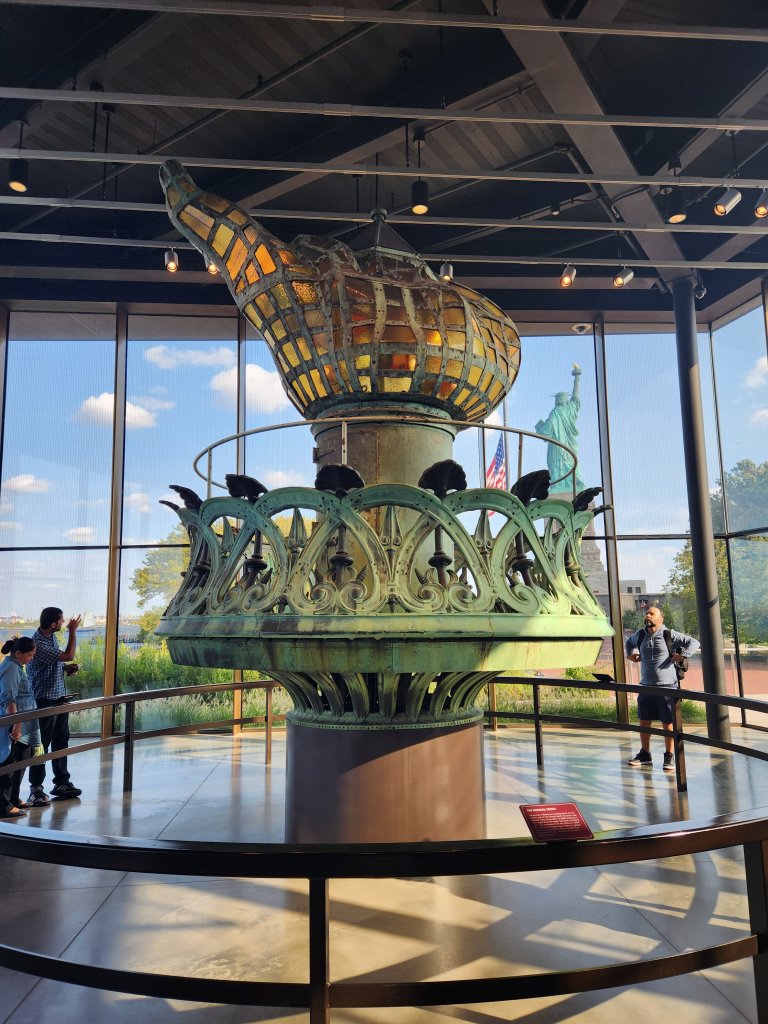
Impressions
Unfortunately, crown and pedestal entry was closed that day. There’s always next time. Seeing the statue up close for the first time made me admire the workmanship done. To design a work of art that large and make it an iconic symbol of freedom in not just the US but worldwide, took a special kind of talent especially in the time period that it was constructed. The Statue inspired me to ponder on what I think “freedom/liberty” means.
What it means for me?
To me “liberty” has a religious and secular meaning which is tied for me, in the same way the Founding Fathers envisioned freedom as coming naturally from God. God has created everyone equal in the sense that one person is not more important naturally. Strip every person of titles, influence, wealth, power, etc., we are all just the same. At the end of the day, God gives us the freedom to choose (free will) whether we accept and follow his commandments or not. As Romans 3:23 says, “for all have sinned and fall short of the glory of God” (Romans 3:23 NIV). We have been born in bondage to sin and use our God-given freedom to paradoxically oppressing your fellow neighbor to feel important and have more “liberty” than the one you oppress but actually it spiritually oppresses yourself in the process. A person is uncontrollably lead by corrupt ambitions that drag them further into despair in trying to maintain said perverted lifestyle. You become a slave to your sin/addiction. I believe Christ died a horrific death for all of humanity, so that through him, we would be able to be free from sin by having Him as a savior. In this life, worry traps us in a hole of despair, anxiety, depression that bounds us to keep us from enjoying life of freedom that God offers in Him. In a secular government like the US, I feel that the government should abide by the “created equal” principle, and give the people the right to live as long as it doesn’t infringe on someone else’s rights. That topic however has been controversial throughout US on how should it be put into practice as the government like the people running it is imperfect. To me ideally, we for the most part strive to live in peace with other people and respect there choices, but using politics for our beliefs to be the dominant ideal often leads us to force our beliefs on other people. We make a lapse in judgement, no matter how much wisdom we accumulate. God to me is the perfect freedom, but because of imperfectness, we won’t be able to experience freedom from the bondage of corruption and sin until we make our home in heaven with him.
What does “freedom/liberty” mean to you?

That quote by Washington just makes the photo more awkward than it really is.
-
Subscribe
Subscribed
Already have a WordPress.com account? Log in now.
 Sam Writes LI